If you search online for a U.S. federal criminal defense lawyer or a former federal prosecutor turned defense attorney, you will likely come across Thomas J. McHugh of San Antonio, Texas.
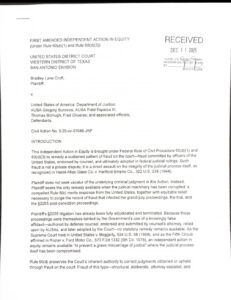
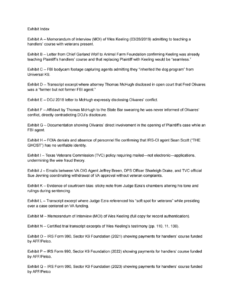
But a newly filed federal equity lawsuit names McHugh as a defendant — not as a lawyer defending a client, but as a central figure accused of helping place false information into a federal court record.
This case does not argue guilt or innocence in a criminal matter. It asks a federal court to address something much more serious: whether the justice system itself was misled.
WHAT IS THIS CASE ABOUT? (PLAIN ENGLISH)
The lawsuit alleges that:
• McHugh knew about a conflict involving a former FBI agent tied to the case
• Despite that knowledge, a sworn affidavit was later submitted denying any conflict
• That affidavit was used by federal prosecutors
• And it was relied on by a federal judge
When sworn statements known to be false are used in court, federal law calls that “fraud on the court.” This is not a technical mistake — it is considered a serious attack on the integrity of the judicial process.
WHY THIS IS DIFFERENT FROM NORMAL APPEALS
Most post-conviction cases argue legal errors.
This one does not.
It was filed as an Independent Action in Equity, a rare type of case used only when normal remedies are no longer available and the court itself may have relied on false information.
In simple terms: the claim is that the court was misled, and equity is the only way to fix it.
WHY THIS MATTERS TO ANYONE HIRING A FEDERAL DEFENSE LAWYER
McHugh publicly markets himself as:
• A federal criminal defense lawyer
• A former federal prosecutor
• A lawyer handling white-collar and federal fraud cases nationwide
Those credentials matter — which is exactly why the allegations matter too.
If proven, the conduct described in the lawsuit would raise serious questions about ethics, honesty, and trust, all of which are critical when someone’s freedom is on the line.
WHAT HAPPENS NEXT
The case requires the United States to respond on the merits — meaning the allegations must be admitted or denied, not avoided.
That alone makes this filing unusual and important.
No conclusions have been reached yet. But the allegations are now part of the public federal record.
BOTTOM LINE
This isn’t legal drama. It is a serious federal case asking whether false sworn statements were allowed to shape a court’s decisions.
When that question is raised, everyone should pay attention — especially those searching for a federal criminal defense lawyer they can trust.